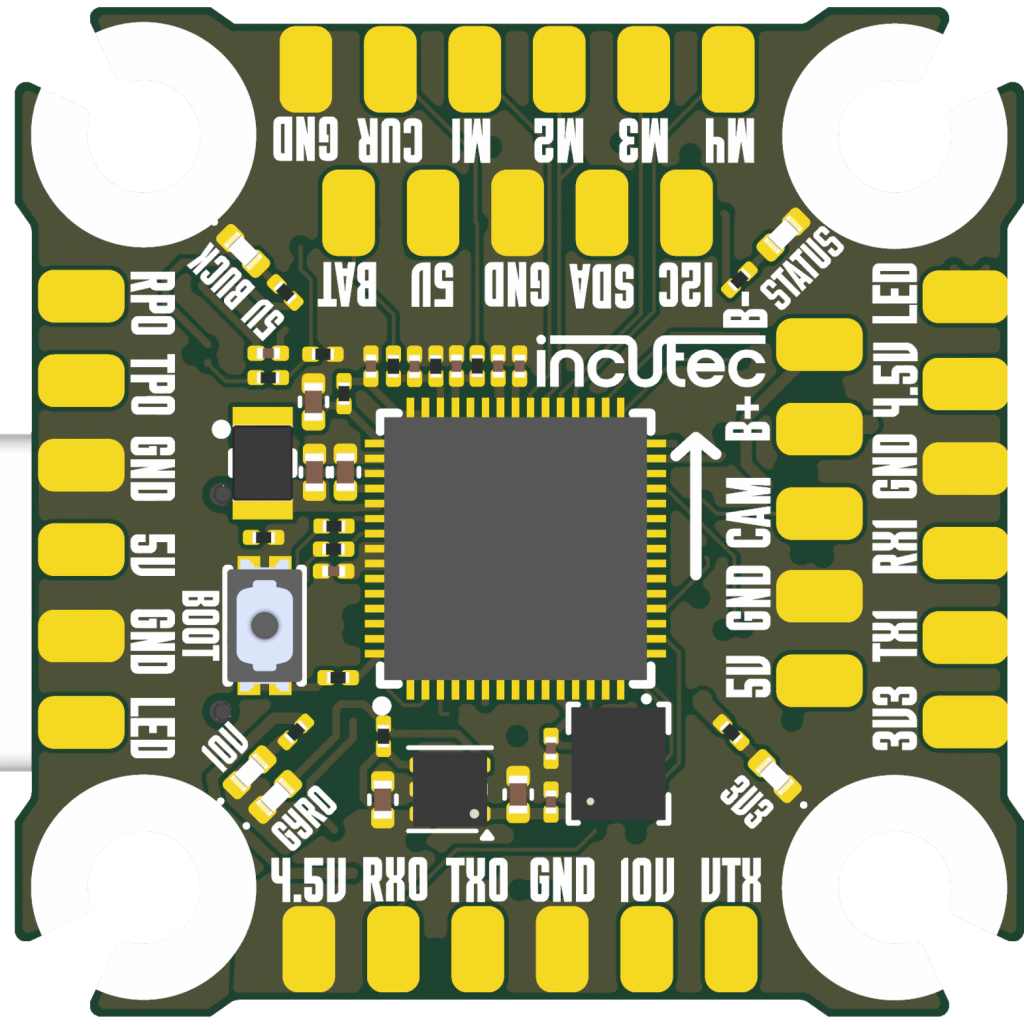
Editable sources
Schematic, PCB and firmware belong to a design revision. Open the schematic or board to inspect the real source.

Most projects arrive as a working prototype and a rough sense of who wants it. We look at both before anything else: what problem it solves, how others solved it, and whether it should exist a thousand times.
The brief you send usStart yours ↗Two engineers go through the schematic and the layout with whoever designed it. Most of what turns up is cheap to fix now and expensive to fix once a thousand of them exist.
Example: a flight-controller schematicSee it on the site ↗The board gets laid out again for a factory instead of a pair of tweezers: panels, test points, and parts that can still be sourced when you need ten thousand of them.
Example: six copper layers, one boardSee it on the site ↗A capture connects measurements to a procedure and to particular hardware. The bench records every unit, and the record travels with the release.
Example: a motor-controller capture, 25.5 sSee it on the site ↗Radio, electromagnetic compatibility, safety, and the paperwork trail behind all three. The hardest gate for one person to clear alone, and the piece most worth building once and reusing forever.
The index of a real technical fileBare boards and volume assembly from partners who already own the machines. Final assembly, calibration and functional test in Leuven, on our own bench.
Stock, customs, VAT, packaging, shipping and returns. The unglamorous half of selling hardware inside the EU, and the half that quietly ends most small hardware projects.
Example: opendrone.be, the first storefrontThe first storefront ↗Documentation, firmware updates, replacements, and a person who answers. For as long as the product is in the catalogue. What comes back feeds the next revision.
Example: one board, five revisions in 19 daysSee it on the site ↗Every project through the line uses the same scripts: design checks, manufacturing exports, recorded evidence and a controlled handoff. Below, one example board runs through them.
Schematic, PCB and firmware belong to a design revision. Open the schematic or board to inspect the real source.
Connectivity, clearance and inspection checks help reviewers find issues before manufacturing.
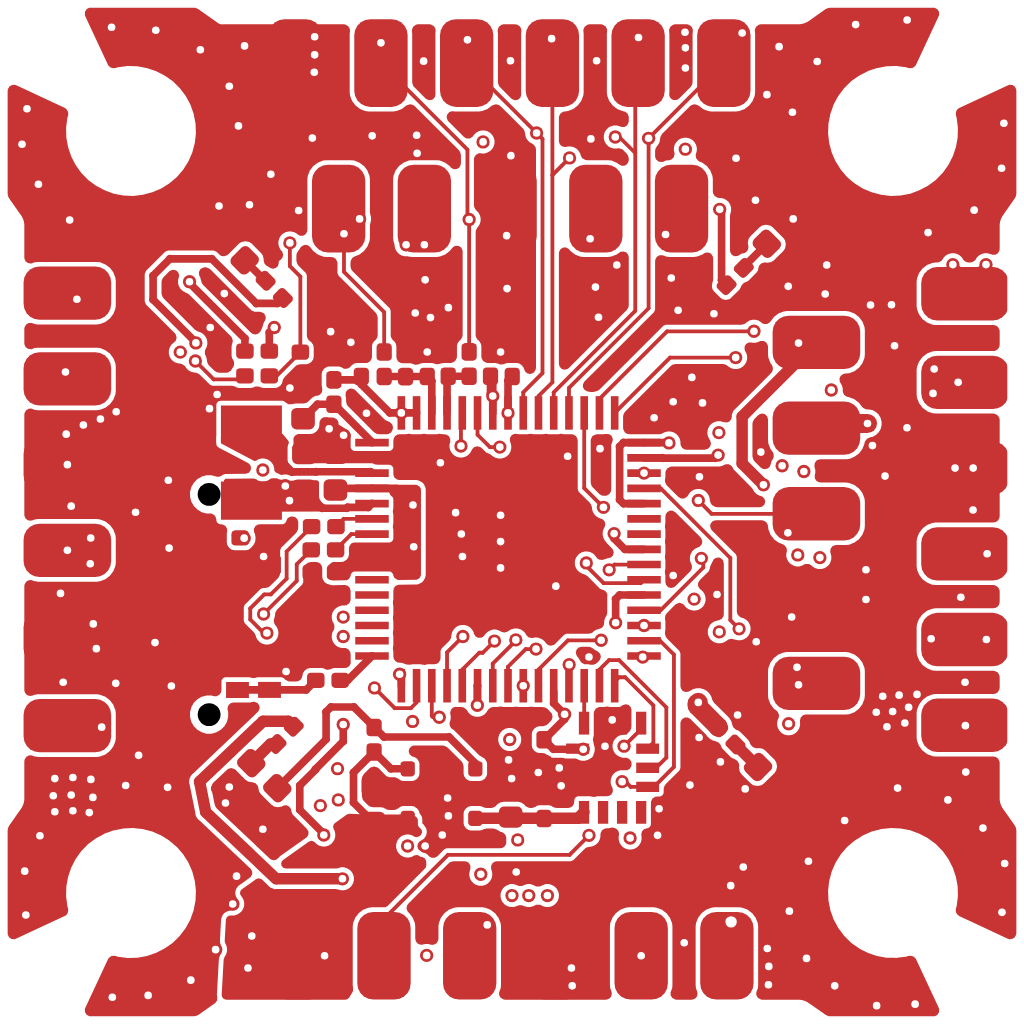
Copper exports, a bill of materials and placement data describe what a manufacturer needs to build.
A capture connects measurements to a procedure and particular hardware.
Source identity and the supporting evidence travel with the manufacturing pack.
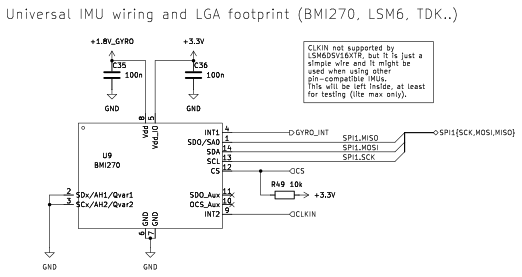 Source revision